
"I was not prepared for how moving Hiroshima would be. The museum doesn't sensationalise anything. It simply shows you what happened to real people. Give yourself time — this isn't a place to rush."
Hiroshima Peace Memorial Park
Hiroshima Peace Memorial Park is a 120,000 square metre memorial site in the centre of Hiroshima, covering the northern half of an island where the commercial heart of the city once stood. Before August 6, 1945, this area was one of the most densely built neighbourhoods in Hiroshima. The atomic bomb exploded 600 metres above it. The blast completely flattened everything within range, leaving almost no structures standing.
After the bombing, architect Kenzo Tange won the master plan competition for the site's reconstruction. His design created a large park oriented on a central axis: the Memorial Cenotaph at the park's centre, the Flame of Peace reflected in the Peace Pond, and the A-Bomb Dome framed in the arch of the cenotaph across the river. The park was established as a dedicated memorial site and opened progressively from 1954. Today it contains over 60 monuments and memorials and receives millions of visitors each year.
The A-Bomb Dome
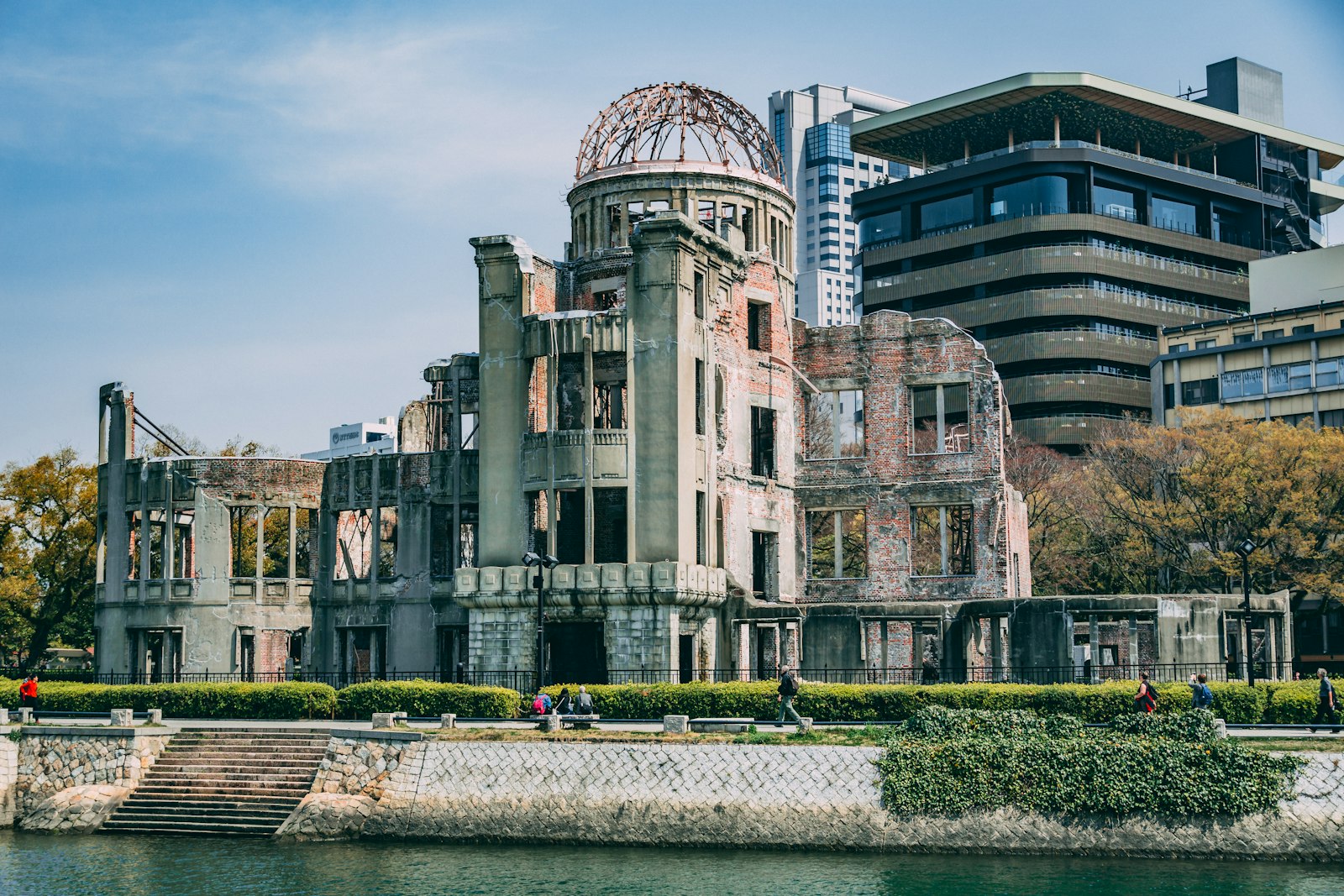
The A-Bomb Dome (Genbaku Dome) is the only building in the area that survived in recognizable form. It was the former Hiroshima Prefectural Industrial Promotion Hall — a five-storey building near the original location of the hypocenter of the blast. The atomic bomb exploded almost directly overhead; the downward force of the blast collapsed surrounding buildings but left the dome's iron framework partially standing. It remained the only building in the vicinity that was not completely flattened.
The Japanese government designated the dome a national monument in 1966 and it was inscribed as a UNESCO World Heritage Site in 1996 — one of very few sites listed for its association with a specific historical event rather than its architecture or natural value. The dome is preserved in its post-blast state as a permanent reminder of the atomic bombing. The genbaku dome stands on the riverbank at the northern edge of the peace park, visible across the water from the cenotaph.
Stand in front of the dome at Genbaku Domu Mae and look south along the park's central axis — the arch of the cenotaph frames the dome from across the river. This alignment is deliberate: Tange's design ensures the victims' memorial faces the building that survived to tell the story.
Hiroshima Peace Memorial Museum
The Hiroshima Peace Memorial Museum opened in 1955 and documents the atomic bombing and its human consequences. It is one of the most significant museums in Japan — not because of its size or design, but because of what it contains: the personal belongings, clothing, photographs and records of people who were alive on August 6, 1945 and were not alive on August 7. The museum provides an in-depth narrative of the bombing and its aftermath, with a particular focus on individual lives rather than strategic history.
The museum features over 100,000 artifacts related to the bombing. The exhibits are organized chronologically, beginning with Hiroshima before the war, moving through the events of August 6, and continuing through the effects on atomic bomb victims in the months and years that followed. The final section addresses nuclear weapons and the ongoing case for disarmament.
Practical information: admission is ¥200 — unchanged for years and one of the most underpriced museum entries in the world. Admission ends 30 minutes before closing time. Allow 90 minutes minimum; many visitors stay longer. An audio guide is available and strongly recommended. The museum is located within Hiroshima Peace Memorial Park at the southern end of the central axis. Weekday mornings are the least crowded. On the August 6 anniversary and during school holidays, queues form and advance booking is recommended.
Memorial Park — Monuments and Cenotaph
The peace park contains around 60 monuments and memorials, each representing a different group of atomic bomb victims or aspect of the bombing. The main axis running from the museum through the Flame of Peace to the cenotaph and on to the A-Bomb Dome is the park's backbone — but many of the most meaningful monuments are off to the sides.
The Memorial Cenotaph (Hiroshima Peace Memorial) is the arched tomb at the centre of the park. It was the first official monument completed in 1950 and was reconstructed in its current form in 1985. The arched stone chest below the arch contains a register of the names of atomic bomb victims — the cenotaph holds the names of over 350,000 victims of the bombing, including both Japanese civilians and Korean labourers who were in Hiroshima at the time. The inscription on the cenotaph reads: "Let all the souls here rest in peace, for we shall not repeat the evil." Looking through the arch frames the Flame of Peace and the A-Bomb Dome on the same axis.
The Flame of Peace has burned continuously since 1964. It will burn until all nuclear weapons on earth are eliminated — a commitment made explicit in its design and dedication. The flame is shaped like hands pressed together in prayer. It symbolizes the survivors' search for water in the aftermath of the bombing, and stands as a symbol of the city's commitment to a world free of nuclear warfare.
The Peace Clock Tower chimes every morning at 8:15 AM — the exact time the first atomic bomb was dropped on Hiroshima on August 6, 1945.
Children's Peace Monument
The Children's Peace Monument is one of the most visited memorials in the peace park. It honours the children who died as a result of the atomic bombing — and specifically the story of Sadako Sasaki, a girl who was two years old when the bomb fell and developed leukaemia ten years later as a result of radiation exposure. Sadako folded over 1,000 paper cranes before her death at age 12, believing in the Japanese legend that anyone who folds a thousand cranes will be granted a wish. Her wish was to recover and to see peace.
The monument was completed in 1958 after Sadako's classmates raised funds following her death. It features a bronze statue of Sadako at the top with her arms raised, holding a golden crane. At the base, glass cases contain paper cranes sent from around the world — millions of cranes are donated each year from schoolchildren in Japan and internationally. The Children's Peace Monument honours children who suffered from the bombing's effects and serves as a global symbol of peace and hope. The phrase "No More Hiroshimas" has become associated with the monument and the broader peace movement.
Hiroshima Peace — August 6 Ceremony
Every year on August 6, a Peace Memorial Ceremony is held at the park. It takes place at 8:15 AM — the exact time the first atomic bomb exploded over Hiroshima in 1945. The ceremony is attended by the Mayor of Hiroshima, the Prime Minister of Japan, representatives of foreign governments, survivors of the bombing (hibakusha), and thousands of members of the public.
The ceremony includes the ringing of the peace bell, a minute of silence at 8:15, the reading of the Peace Declaration by the Mayor, and the release of doves. The Flame of Peace is tended and prayers are offered at the cenotaph. If visiting on August 6, arrive very early — the area around the cenotaph fills before dawn. The anniversary draws large crowds and the atmosphere is deeply moving. For visitors who cannot attend the ceremony, the park at early morning on any day is quiet and reflective in a way that midday visits rarely are.
A Bomb Victims and the Peace Bell
The park contains multiple monuments specifically dedicated to a bomb victims from different groups: Korean atomic bomb victims (a separate monument acknowledging the large number of Koreans who were in Hiroshima as forced laborers), mobilized students, military personnel, and others. The Cenotaph for A-Bomb Victims holds over 220,000 names — with new names added each year as survivors and those who died later from radiation-related illness are formally registered. The memorial cenotaph serves as both a monument and an ongoing record.
The Peace Bell (Reitō no Kane) hangs in the park near the pond and is rung by visitors as a prayer for peace. The bell's surface is engraved with a map of the world without national borders. Visitors are invited to ring it — the bell is meant to remind the world of the consequences of nuclear warfare and the ongoing responsibility to pursue disarmament.
Genbaku Dome — Practical Visit Guide
The genbaku dome is located at the northern edge of the park on the Motoyasu River. The Genbaku Domu Mae tram stop on the Hiroshima tram network is directly in front of the dome — take tram line 2 or 6 from Hiroshima Station. From the stop, the dome is visible immediately. The park entrance and the museum are a short walk south along the river.
The dome is open and visible at all hours — there is no admission charge and no barrier. The best time to visit is early morning before 9am, when the site is quiet and the light is soft. At night, the dome is lit and the reflection in the river is remarkable. The dome cannot be entered — it is preserved as a ruin — but you can walk around the perimeter and view it from multiple angles.
Hiroshima City — Getting to the Peace Park
From Hiroshima Station, take tram line 2 (bound for Miyajima-guchi) or tram line 6 to Genbaku Domu Mae — about 15 minutes, ¥180. The A-Bomb Dome is directly in front of the stop. From there, cross the Motoyasu Bridge into the peace park and follow the central path south toward the cenotaph and museum.
The Peace Memorial Park and museum are in the centre of Hiroshima city, easy to reach by tram or bus from anywhere in the city. There is no vehicle access to the park interior. Most visitors arrive on foot from the tram stop or from nearby hotels.
From Tokyo: take the Shinkansen to Hiroshima Station — approximately 4 hours on the Nozomi, 4 hours 20 minutes on the Hikari. The Shinkansen is covered by the Japan Rail Pass. From Osaka: approximately 1 hour 30 minutes by Shinkansen.
How Much Time — Visit Planning
Allow 3–4 hours minimum for a serious visit to Hiroshima Peace Memorial Park. The museum alone requires 90 minutes. The main park monuments — cenotaph, flame of peace, children's peace monument, peace bell — take an additional 45–60 minutes if you move slowly and read the interpretation. Add time for the A-Bomb Dome at the northern end.
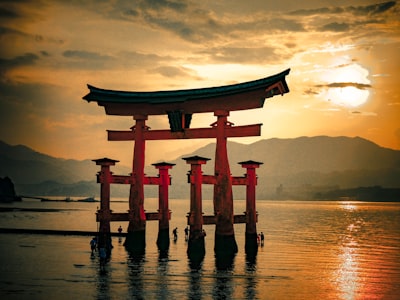
Many visitors combine Hiroshima Peace Memorial Park in the morning with a trip to Miyajima Island in the afternoon. Miyajima (Itsukushima) is 30 minutes from Hiroshima by tram and JR ferry — the floating torii gate of Itsukushima Shrine is one of Japan's most photographed images. If you only have one day in Hiroshima: museum and park in the morning, Miyajima in the afternoon.
The park itself is free and open 24 hours. The museum's admission is ¥200 and the hours are typically 8:30am–6pm (until 7pm March–July and September, until 8pm August, until 5pm December–February). Admission ends 30 minutes before closing. Confirm current hours before visiting as they are adjusted seasonally.