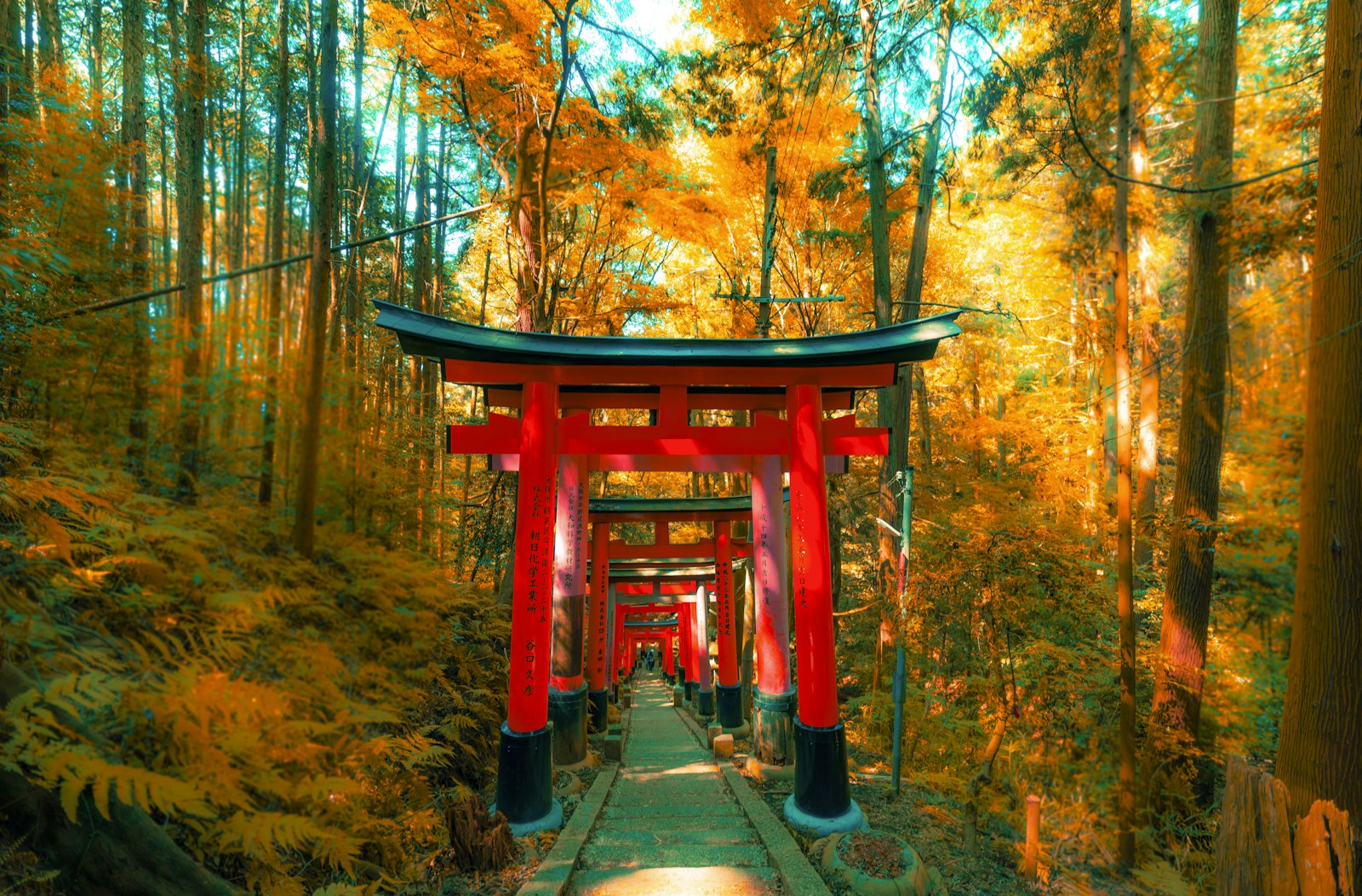

"I've been to Fushimi Inari four times. Twice with crowds, twice at dawn. They feel like completely different places. If you do one thing right in Kyoto, let it be this: get there before 7am."
Fushimi Inari Kyoto is one of the most popular sights in Japan and one of the most visited shinto shrines in the world. The shrine receives about 10 million visitors annually and consistently ranks as Japan's top tourist attraction. Fushimi Inari Taisha is located in southern Kyoto, a 5-minute train ride from Kyoto Station on the JR Nara Line.
Visiting Fushimi Inari is free — the shrine is free to enter and open 24 hours a day with no admission fee, no ticket, and no reservation required. This makes the timing of your visit your most important decision.
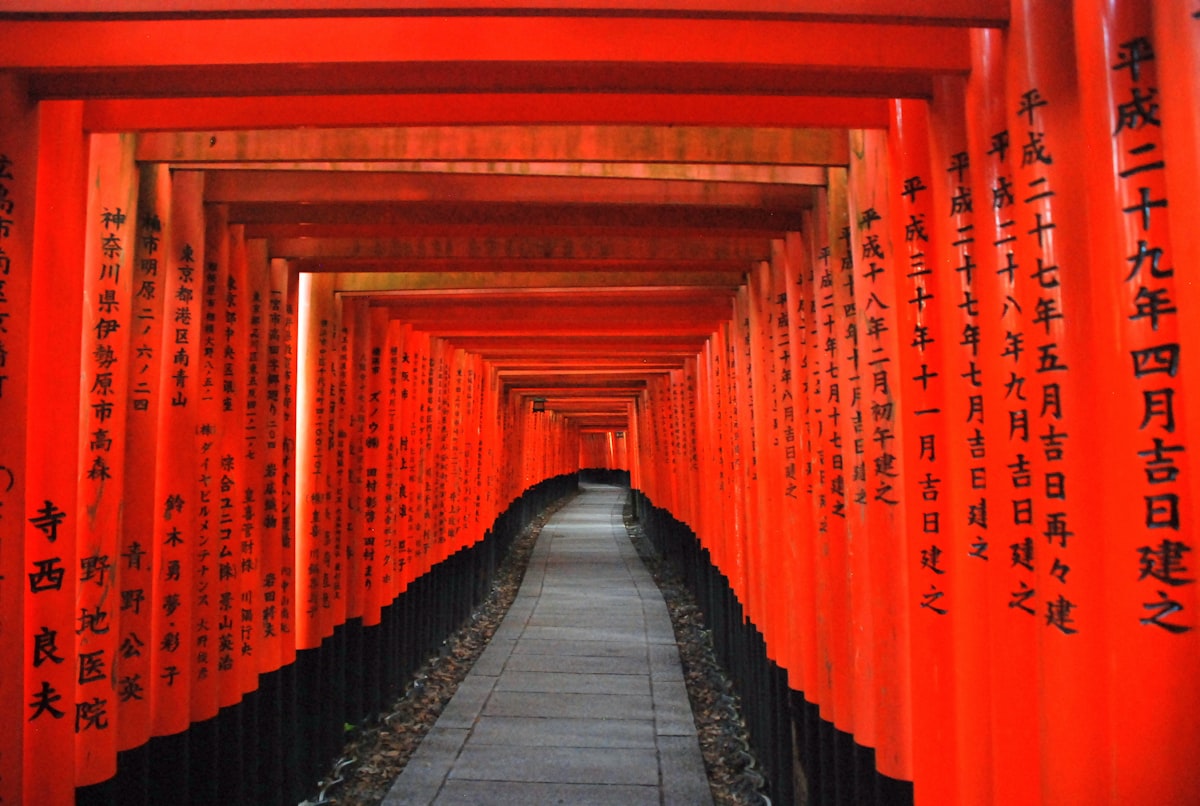
Fushimi Inari Taisha — over 10,000 torii gates line the trails of sacred Mount Inari
Fushimi Inari Shrine — History and Meaning
Fushimi Inari Shrine was founded in 711 AD — making it over 1,300 years old — and is dedicated to Inari, the shinto god of rice, agriculture, foxes, and prosperity. The god Inari is one of the most widely worshipped deities in Japan, with Fushimi Inari Taisha serving as the head shrine for over 30,000 inari shrines across the country.
Foxes are considered messengers of the shinto god Inari. Many fox statues are found throughout the shrine complex — at the main entrance, along the main path, at sub shrines, and at the summit. The custom of donating torii gates began about 400 years ago; today, torii gates are donations made by individuals and businesses seeking prosperity and good fortune — over one million yen is required for the largest gates.
Fushimi Inari Taisha — Main Shrine Buildings
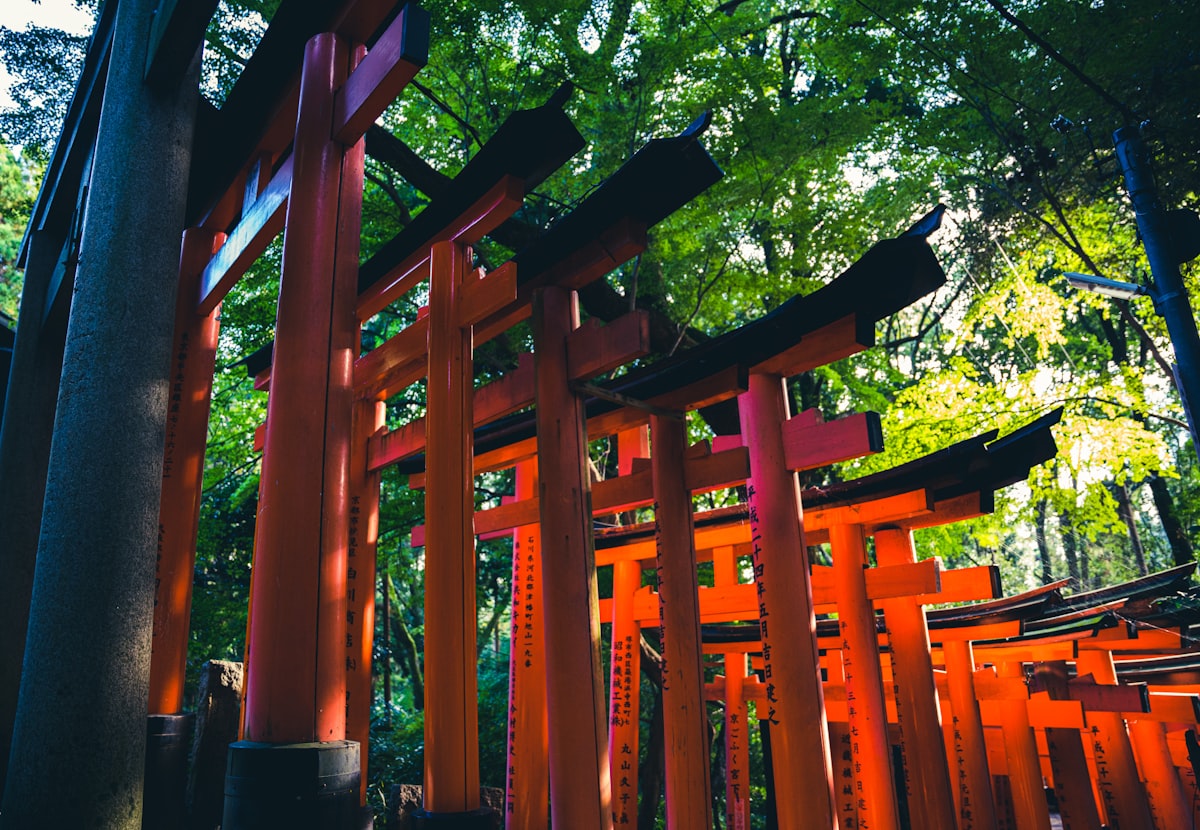
Fushimi Inari Taisha — the main shrine buildings and Romon Gate at the base of Mount Inari
The main shrine complex at the base of Mount Inari includes the main hall, the inner shrine, several main buildings, and the large gate known as the Romon Gate. The Romon Gate was donated in 1589 by Toyotomi Hideyoshi during the Edo period and stands at the main entrance as an Important Cultural Property. Beyond the Romon Gate, the main buildings include the inner shrine and the upper shrine higher on the mountain. Various shrines and sub shrines are scattered throughout the surrounding area along the main route. Souvenir shops and vending machines line the lower section between the main entrance and the start of the torii tunnel.
Inari Taisha — The God Inari and Fox Statues
Many fox statues guard every junction, shrine, and sub shrine along the trail. Foxes are considered messengers of the deity Inari in japanese shinto tradition. Many fox statues hold symbolic items: a key to the rice granary, a jewel, a sheaf of rice, or a scroll. The fox statues at Fushimi Inari come in all sizes — from small stone figures at the side of the path to large gate guardians flanking the main entrance. Fushimi Inari is dedicated to the shinto god of rice and prosperity, making many fox statues an integral part of the entire shrine experience.
Fushimi Inari — The Main Entrance and Romon Gate
The main entrance to Fushimi Inari Taisha shrine is marked by the Romon Gate — a two-story large gate that is the most photographed landmark at the shrine. The Romon Gate was donated in 1589 by Toyotomi Hideyoshi and has stood at the main entrance for over 400 years. The main entrance area includes the main shrine buildings and leads to the inner shrine and the beginning of the Senbon Torii section. The main hall of the inari shrine sits directly beyond the main gate and is the spiritual center of sacred Mount Inari.
Senbon Torii — Thousand Torii Gates
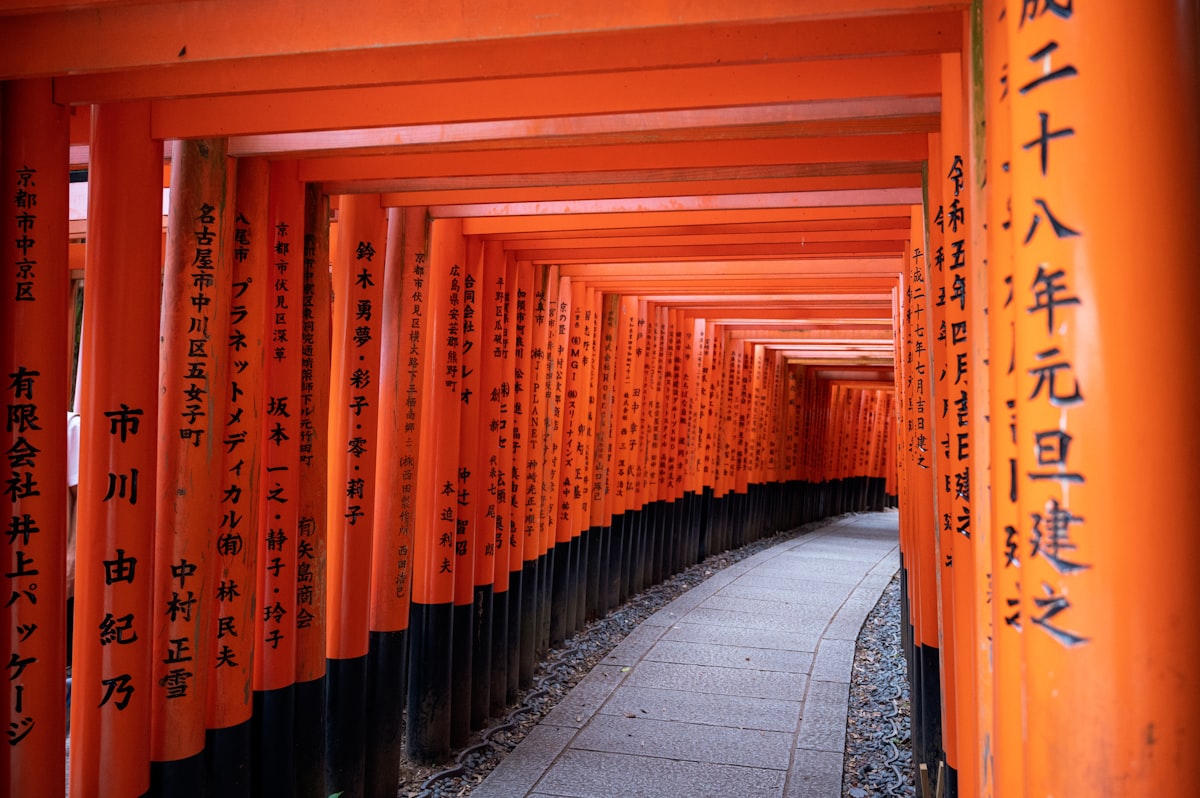
Senbon Torii — the famous double tunnel of torii gates, the most photographed section of Fushimi Inari
Senbon Torii means "thousand torii gates" — the famous double tunnel of closely spaced vermilion torii gates that forms the heart of visiting Fushimi Inari. The Senbon Torii section contains over 1,000 torii gates arranged so densely that they form a continuous tunnel of vermilion. Fushimi Inari Shrine has over 10,000 torii gates in total across sacred Mount Inari, but the Senbon Torii is the most concentrated section of the main path.
Torii gates are donations made for prosperity and good fortune by individuals and businesses. Each gate is inscribed with the donor's name, company, and date of donation. The custom of donating torii gates began about 400 years ago and continues today — over one million yen for a large gate. The trail includes over 1,000 torii gates along the main path, creating a visual tunnel effect at every turn.
Fushimi Inari Hike — Trail Guide
The fushimi inari hike is a 4km loop trail that climbs sacred Mount Inari to an elevation of 233 meters. The hike takes about 1.5 to 2 hours to complete at a steady pace — allow 2 to 3 hours to hike to the top of Mount Inari and return if stopping frequently. The trail features a 230-meter elevation gain. The trail is not suitable for strollers or wheelchairs; the path includes uneven stone steps and steep sections. The fushimi inari hike is an easy hike by mountain standards but requires suitable footwear.
The main route from the main entrance follows the main path through the Senbon Torii section and past various shrines and sub shrines. The yotsutsuji intersection is one point where visitors can choose to continue to the summit or turn back — the view over kyoto city from yotsutsuji is excellent and many visitors stop here. The easy hike to yotsutsuji intersection takes 30–40 minutes from the main gate and is suitable for most visitors.
The higher you hike at Fushimi Inari, the thinner the crowds become. The main hall and lower trails can get congested with tourists; above the yotsutsuji intersection the trail becomes quiet. The upper shrine and summit offer a solitary experience with smaller shrines, many fox statues, and sub shrines at each junction.
Main Shrine — What to See at the Base
The main shrine complex includes the main hall, the inner shrine, and the main buildings of Fushimi Inari Taisha. The main shrine is dedicated to the god inari and hosts important shinto rituals throughout the year. The inari shrine at the base features the main gate, the main hall, various shrines, and the start of the famous senbon torii. The main buildings of the inari taisha are best visited before starting the trail — they set the context for the thousands of torii gates above. Many worshippers visit the main shrine daily, making it one of Japan's most active shinto shrines.
Early Morning — Best Time for Visiting Fushimi Inari
Early morning is the single most important tip for visiting fushimi inari. Best times to visit are at sunrise or after 6pm. Arriving at 7am during winter avoids crowds effectively. The peak tourist season is mid-March to early April — arrive before 7am during this period. By 9am the main path and senbon torii fill with tourists; by 10am the lower trails are congested. Fushimi Inari receives about 10 million visitors annually — early morning is the only reliable way to experience the shrine without crowds.
Fushimi Inari Shrine is open 24 hours a day — visiting at night is possible and atmospheric, with the torii gates lit from below. The shrine at night is a completely different experience: the path is quiet, and the vermilion gates glow in the darkness. Visiting Fushimi Inari at sunrise or just after is one of the most rewarding experiences in kyoto.
Fox Statues — Many Fox Statues Along the Trail
Many fox statues line every section of the fushimi inari hike — from the main entrance to the summit. The fox statues represent the messengers of the shinto god Inari. At each of the various shrines and sub shrines along the trail, fox statues guard the entrance in pairs. The many fox statues differ in age and style — some are ancient stone, some are freshly painted. Visitors to fushimi inari taisha shrine often place offerings at the fox statues as a traditional japanese gesture of respect to the deity.
Where to Stay Near Fushimi Inari
The Kyo-Machiya Stay is 1 minute from Fushimi Inari Shrine — a traditional japanese house with a sauna and mountain views. Staying 1 minute from the shrine allows guests to visit in the early morning before day-trippers arrive. Inari Ohan is a traditional Kyoto home 5 minutes from the shrine, accommodating families of up to 5 guests. Both accommodations have high review scores above 9.0. Staying near the shrine overnight is the best strategy for visiting fushimi inari without crowds.
How to Get to Fushimi Inari — Train Stations
The easiest way is the JR Nara Line from Kyoto Station to JR Inari Station — 5 minutes, ¥150. The shrine gate is a 2-minute short walk from JR Inari Station. This is the fastest option for visiting fushimi inari from central Kyoto. Fushimi Inari Station on the Keihan Line is also a few minutes walk from the main entrance — useful if arriving from Osaka or Gion Shijo on the Keihan Line. Both train stations are in the surrounding area of the shrine. Fushimi Inari is located in southern Kyoto, about 3km south of Kyoto Station.
What to Eat at Fushimi Inari
The path from the train stations to the main entrance is lined with souvenir shops and food stalls. The local specialty is inari-zushi — fried tofu pockets filled with rice, named after the deity Inari. Kitsune udon (noodle soup with sweet fried tofu) is the other classic dish from kyoto's Japanese culinary tradition. Vending machines are available along the trail. The stalls near the main entrance operate from mid-morning; arrive early morning and bring water as the stalls will be empty. The surrounding area also has small restaurants and temples along the approach to the shrine.