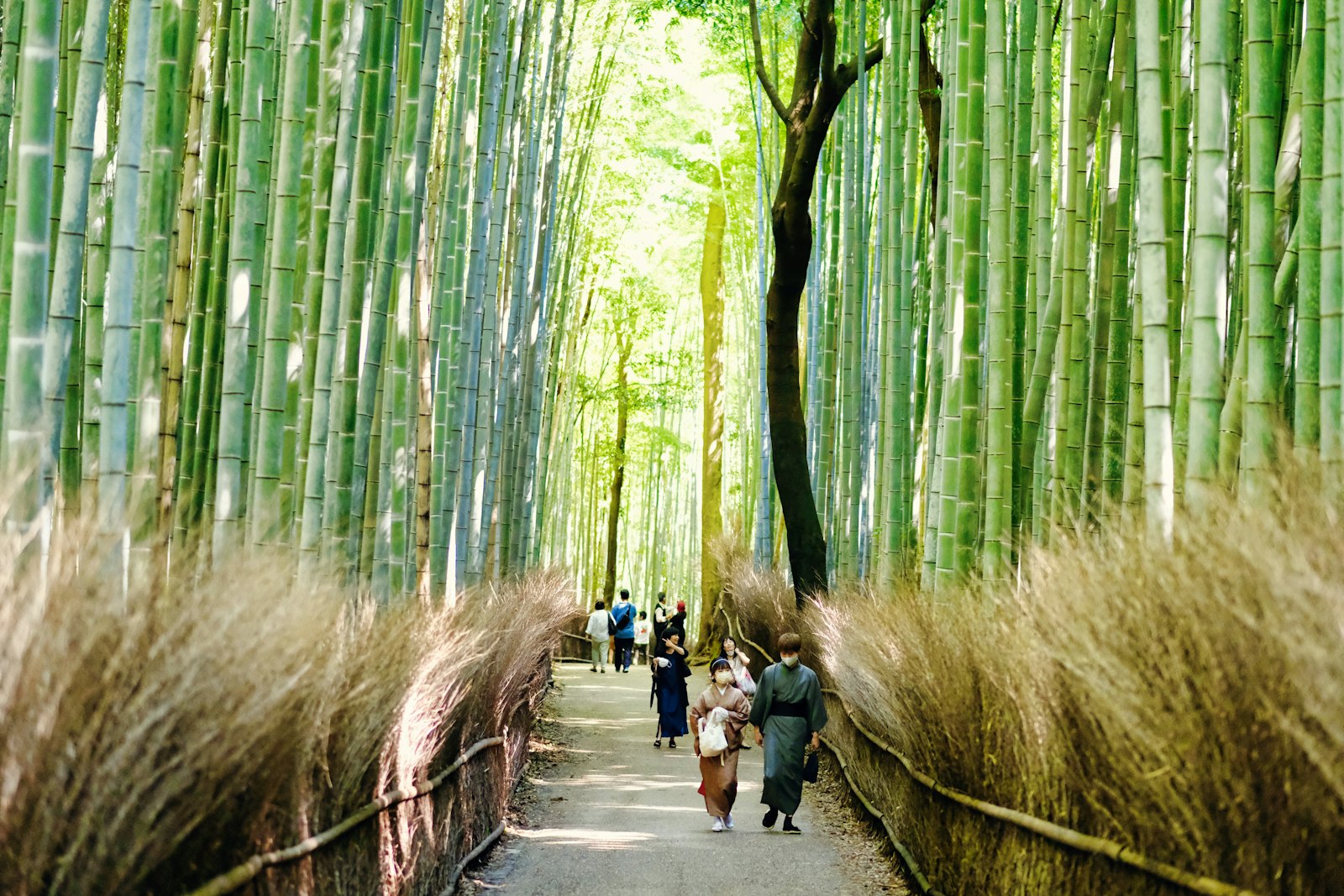

"The bamboo forest takes about 4 minutes to walk through. Go anyway. The sound — the hollow percussion of bamboo in the wind — is unlike anything else in Japan. Just go before 8am and you'll understand why people travel across the world for this."
Arashiyama Kyoto — What Is It?
Arashiyama is a scenic district on the western outskirts of Kyoto, located at the foot of the Arashiyama mountains where the Katsura River curves through a forested valley. Kyoto's Arashiyama district is one of Japan's most visited areas — and one of the few that fully lives up to its reputation.
The district was established as a retreat for the Japanese imperial court during the Heian period, which ran from 794 to 1185. Today, Arashiyama is famous for its natural beauty and historic temples. The main attractions are the Sagano bamboo forest, the UNESCO World Heritage ji temple Tenryu-ji, the moon crossing bridge Togetsukyo, the Arashiyama Monkey Park Iwatayama, and the Hozu River boat ride. These are among the most popular places to visit in all of Japan.
Most people visit Arashiyama on a day trip from central Kyoto or from Osaka. The experience of walking from station to bamboo grove — past Japanese tea houses, kimono rental shops, and shrine gates — makes Arashiyama feel unlike any other city district in Japan. The JR Sagano Line connects JR Kyoto Station to Saga-Arashiyama Station in 15 minutes. The arashiyama area is compact enough to explore on foot — the main attractions cluster within 15 minutes walking of each other.
Arashiyama is a great place to spend a full day. The unique experience of the bamboo grove combined with a UNESCO Zen garden, a monkey park, and a river boat ride makes this the most complete day trip from Kyoto available to travelers.
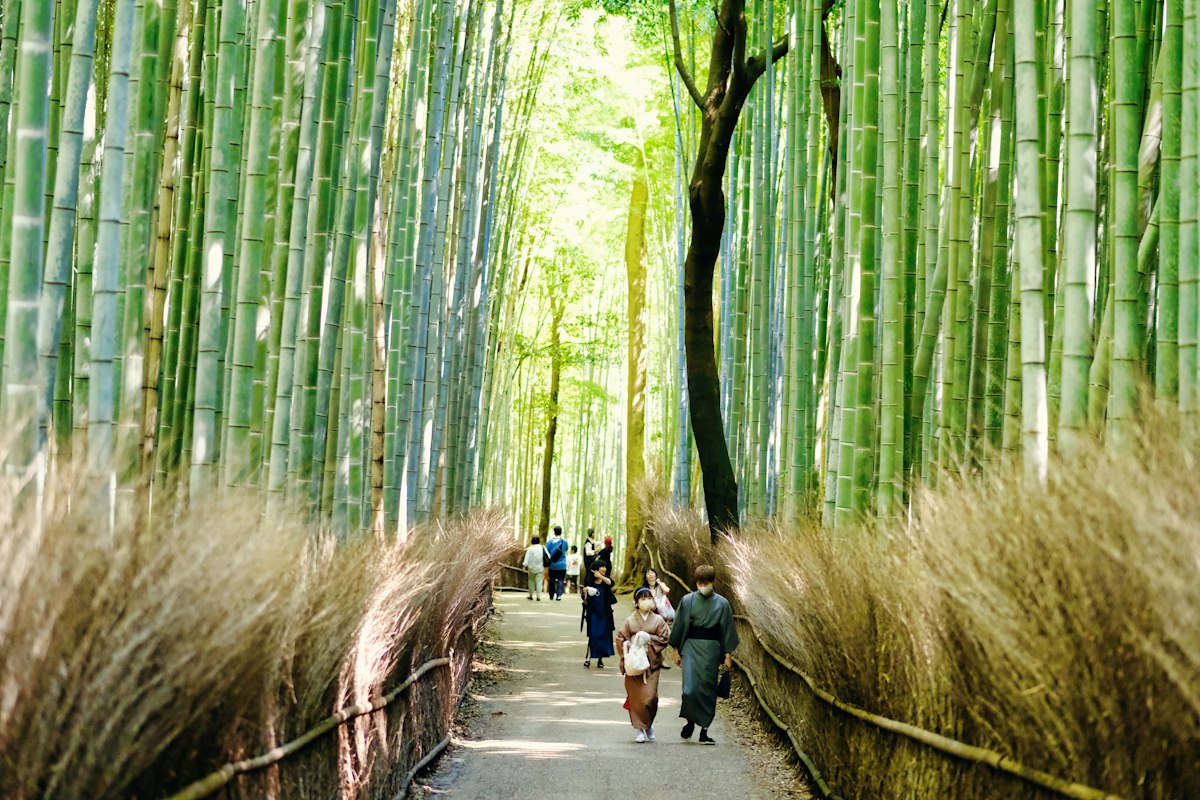
Arashiyama — scenic district on the western outskirts of Kyoto, famous for bamboo and temples
Arashiyama Bamboo Grove
The Arashiyama bamboo grove — formally the Sagano bamboo forest — is the defining image of Kyoto. A narrow path runs through towering bamboo stalks that reach 20 metres overhead, filtering the light and creating a sound unlike anything else in Japan. On a windy day you hear the grove before you see it: a hollow, percussive knocking echoes through the bamboo.
Walking through the bamboo grove is the highlight for most visitors. People come from Tokyo, Osaka, and across the world to take photos here. The bamboo grove is one of those rare places where the experience justifies the journey.
Arashiyama Bamboo Forest — Key Facts
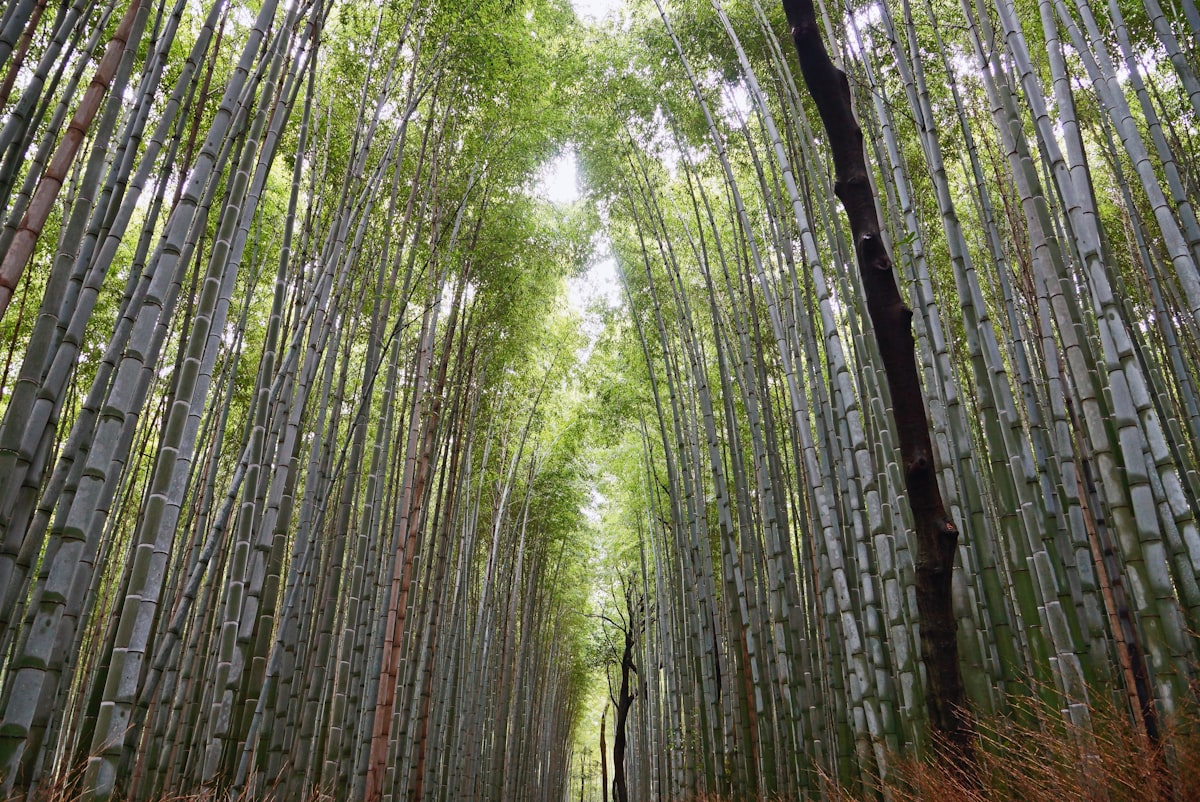
The Arashiyama bamboo forest — one of the most photographed spots in Japan
- The main path, Chikurin no Komichi, is 400 metres long — walking it takes about 5 minutes
- The bamboo forest features two main paths through the grove
- Open 24 hours a day, 365 days a year — free entry, no tickets
- Entrance is a 13-minute walk from JR Saga-Arashiyama Station
- The Arashiyama bamboo grove is one of the most photographed spots in Japan
- Towering bamboo stalks reach 20 metres overhead
- The bamboo forest is open at night — early morning and late evening visits make for the best photos
The arashiyama bamboo forest is short — walking it takes 4–5 minutes — but the experience has a cultural significance that keeps people coming back. It is not what you expect from a grove of bamboo. The bamboo forest, combined with the enclosed green canopy and the sound, creates something that makes this one of the truly unique experiences in Japan. Most visitors find it worth visiting even multiple times.
Bamboo Forest — Best Time to Visit
Early morning is the best time to visit the bamboo grove for fewer crowds. Arrive before 8am. By 9am the arashiyama bamboo forest is packed with tourists and tour groups. By 10am it is chaotic. The bamboo grove entrance is free and open all night — dawn visits in the bamboo forest are extraordinary.
- Spring (late March–early April): cherry blossoms frame the bamboo grove entrance — peak crowds, peak beauty
- Autumn (mid-November): maple foliage turns red around the bamboo forest — equally crowded
- Winter (December–February): the bamboo grove stays green while deciduous trees are bare — far fewer visitors
- Summer mornings: cool and quiet before the crowds arrive — great time for photos
Visiting on weekdays helps avoid the heaviest tourist crowds in Arashiyama. The experience before 8am and at noon are completely different — arriving early makes this a peaceful, beautiful walk rather than a busy photo queue.
Tenryu-ji — The Ji Temple UNESCO Site
Tenryu-ji's pond garden with the Arashiyama mountains as backdrop — a UNESCO World Heritage Site
Tenryu-ji is a UNESCO World Heritage Site and one of the most important ji temple complexes in Japan. Tenryu-ji Temple was founded in 1339 during the Muromachi Period. Its back gate connects directly to the arashiyama bamboo grove — this is why most visitors combine the two.
The main garden (¥500) centres on a large pond with the Arashiyama mountains forming the backdrop via shakkei (borrowed scenery). The garden was originally built when the ji temple was founded. Tenryu-ji temple grounds open at 8:30am — allow 45–60 minutes for the garden.
Walking the temple grounds takes you past Japanese stone lanterns, shaped pine trees, and seasonal flowers. The scenery changes completely with each season — the ji temple grounds are beautiful in spring cherry blossoms, lush green in summer, fiery autumn colours in November, and stark when it snows in winter.
- Entry: ¥500 (garden); ¥800 (garden + temple buildings)
- Hours: 8:30am–5:30pm (to 5pm in winter)
- Located adjacent to the arashiyama bamboo forest, western outskirts of Kyoto
- One of Kyoto's five great Zen temples
- Check the official website before visiting for seasonal closures
Togetsukyo Bridge — Moon Crossing Bridge

Togetsukyo — the moon crossing bridge over the Katsura River — is the central landmark of Arashiyama
Togetsukyo Bridge is the central landmark of Arashiyama. The name translates as "moon crossing bridge" — the bridge spans the Katsura River and frames views of the Arashiyama mountains behind. The bridge was reconstructed in the 1930s but originally built during the Heian period. It has stood in some form on this spot for over a thousand years.
The main street of Arashiyama runs along the southern bank of the river from the bridge toward central Arashiyama. Restaurants, tea houses, kimono rental shops, and souvenir shops line this route. The riverside makes a great place to relax and enjoy the scenery after walking the bamboo forest and temple grounds.
In spring, cherry blossoms line the Katsura River banks on both sides of the Togetsukyo bridge — the backdrop is the Arashiyama mountains. In autumn, the foliage on the mountains turns red and gold behind the bridge. For photos, the Togetsukyo bridge with the mountains behind is the most reproduced view of Arashiyama.
Arashiyama Monkey Park — Iwatayama

The Arashiyama Monkey Park Iwatayama is home to over 100 wild Japanese macaques
The Arashiyama Monkey Park Iwatayama is home to over 100 wild Japanese macaques that roam freely on the hillside above Arashiyama. Entry ¥600. Hours 9am–4:30pm. The entrance is a short walk from the Togetsukyo bridge. The monkeys are Japanese macaques — the only primate native to Japan besides humans.
- 20-minute uphill hike on steps to the feeding station
- Humans stay inside the cage; monkeys roam freely outside — a fun reversal
- The monkeys approach the cage to be fed; you can take photos through the wire
- Panoramic views over Kyoto city and the surrounding area from the summit
- Allow 1 hour for the full visit
The monkey park makes the best case for Arashiyama being worth a full day rather than a half-day trip. The views from the top of Mount Arashi are excellent — among the best city views near Kyoto. Kids find the monkeys entertaining; adults enjoy the views and the walk. The cultural significance of Japanese macaques in Japan adds context to the visit.
Sagano Scenic Railway
The Sagano Scenic Railway runs 7 kilometres along the Hozu River gorge at 25 km/h
The Sagano Scenic Railway runs 7 kilometres from Saga-Arashiyama Station to Kameoka through the Hozu River gorge. The train travels at 25 km/h — slow enough to take in the scenery. Open carriages run in spring and autumn. The Sagano Scenic Railway is one of the most popular scenic train experiences near Kyoto.
- Route: Saga-Arashiyama Station to Kameoka (25 minutes each way)
- Price: ¥880 one way — check the website to book seats in advance
- Most visitors combine this with the Hozu River boat ride — train one direction, boat the other
- Spring and autumn are peak season — reserved seats required, book via website in advance
- The train passes through forested gorge scenery with views of the river and mountains
Walking to the Sagano Scenic Railway station from the bamboo grove takes about 5 minutes. Advance booking is strongly recommended during spring (late March–April) and autumn (November) as the train fills quickly.
Hozu River Boat Ride
The Hozu River boat ride lasts about 2 hours through mountain gorge scenery
The Hozu River boat ride lasts about 2 hours, covering 16km from Kameoka to Arashiyama on traditional wooden flat-bottomed boats. The boats seat 25 people and are heated in winter. Cormorant fishing on Hozu River occurs from July to September.
- Price: ¥1,500 per person — buy tickets at Kameoka or reserve via website
- Direction: Kameoka to Arashiyama (one way boat ride, arrives at Arashiyama riverside)
- Best route: take the Sagano Scenic Railway to Kameoka, boat back to Arashiyama
- The boat ride takes you through mountain gorge scenery with seasonal beauty in autumn and spring
- Book in advance during peak season — fills up quickly
The Hozu River boat ride offers scenery that walking the arashiyama area cannot — a river-level view of the gorge, the mountains, and the changing colours of the forest. The boats run through all weather including rain — passengers are covered in the boat.
Other Attractions in the Arashiyama Area
Beyond the bamboo grove and Tenryu-ji, the arashiyama area holds a fair amount of sights worth visiting. Walking north past the bamboo grove, most visitors miss the quieter temples that reward those who go further:
- Okochi Sanso Villa — former home of a silent-film actor; garden with multiple viewing spots and views of Kyoto; matcha tea included; ¥1,000 entry
- Kameyama Park — hillside park north of the bamboo grove with forest walking trails and river views; free and quiet; popular with locals
- Nonomiya Shrine — a small shrine known for its historical significance and unique black torii gate, tucked inside the bamboo forest; recommend stopping here on the way through
- Jojakkoji Temple — founded in 1596, offers views over Kyoto city from the grounds; beautiful autumn foliage in November
- Nisonin Temple — founded in the mid 9th century, Tendai sect; quieter and less crowded than Tenryu-ji; good for peaceful walking
- Daikakuji Temple — converted from an emperor's residence in 876; large ornamental pond; a significant part of Arashiyama's cultural history
- Adashino Nenbutsuji Temple — founded in the early 9th century; ancient stone figures in a forest setting
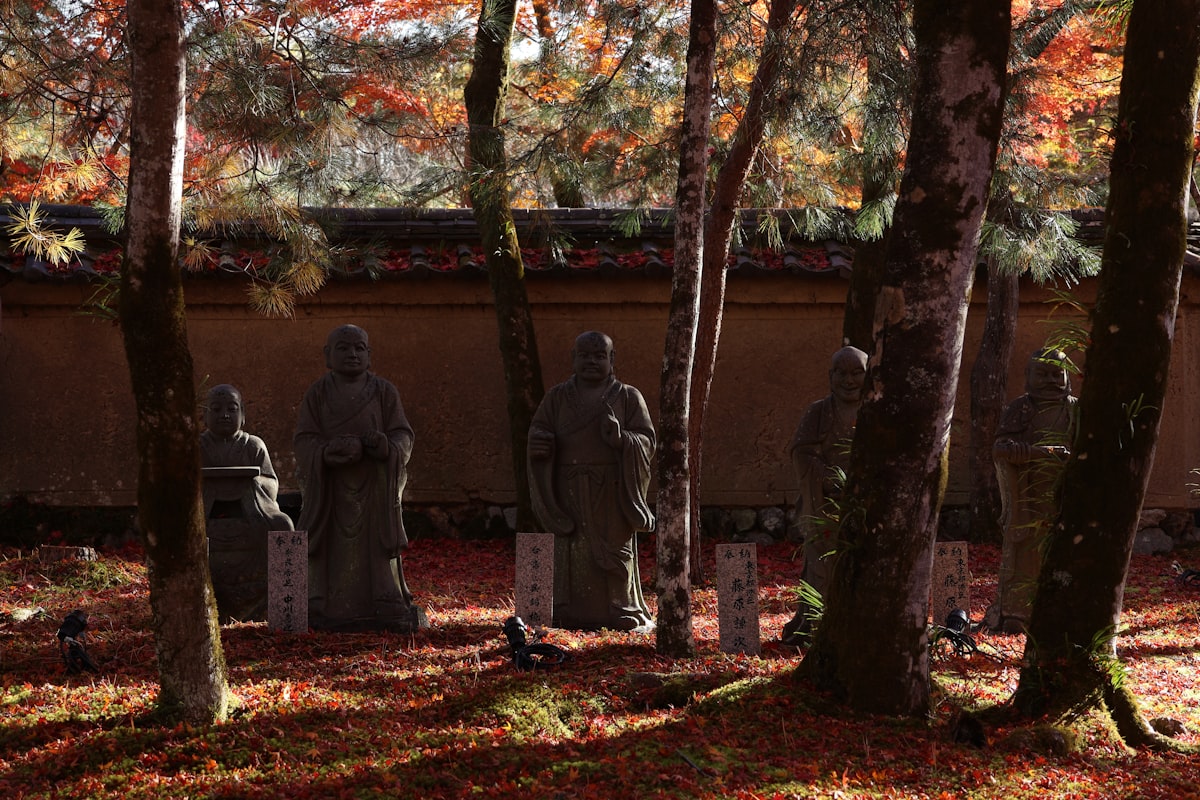
- Otagi Nenbutsuji Temple — features 1,200 unique stone statues of rakan (Buddhist disciples); a short walk from central arashiyama
Most of these temples are a short walk north of the arashiyama bamboo forest. Head past the main crowds and explore the surrounding area — the further you go, the fewer tourists you encounter.
Where to Eat and Restaurants in Arashiyama
Arashiyama's main street along the Katsura riverside has a good number of restaurants. The area is known for tofu dishes — yudofu (tofu hotpot) is the local specialty and appears on menus throughout the district. Lunch sets at riverside restaurants typically run ¥1,500–¥3,000 per person.
For a quick stop, the shops along the main street sell matcha soft-serve ice cream, cinnamon-glazed sweet potato, and grilled rice crackers. Dinner in Arashiyama is quieter — many day-tripping tourists leave by 5pm and the area becomes peaceful. Some restaurants offer kaiseki (multi-course Japanese cuisine) in the evening.
Tea houses along the Katsura River offer a great place to sit, enjoy a cup of tea, and take in the scenery after a morning of walking. Check that restaurants are open before planning dinner — some close early.
Where to Stay in Arashiyama
Staying in Arashiyama overnight is a different experience from a day trip. The arashiyama area empties of tourists in the late afternoon. A ryokan with private baths offers early morning access to the bamboo forest before any tourists arrive.
- Suiran Luxury Collection Hotel — 39 spacious rooms, 17 with private hot spring baths; riverfront location in central Arashiyama
- Hotel Muso — 3-star accommodation in central Kyoto, suitable as a base for an Arashiyama day trip
- Kyo-Anthu Inn — soundproof rooms and free WiFi; budget-friendly option
Ryokan guests typically receive traditional breakfast and dinner included. Prices start around ¥20,000 per person per night — check availability and make reservations well in advance for autumn and spring stays.
How to Get to Arashiyama

The JR Sagano Line from JR Kyoto Station to Saga-Arashiyama Station takes 15 minutes
From JR Kyoto Station: JR Sagano Line to Saga-Arashiyama Station — 15 minutes, ¥240. Fastest option from central Kyoto. Walking from Saga-Arashiyama Station to the bamboo forest entrance takes 15 minutes.
From Shijo/Kawaramachi: Hankyu Arashiyama Line from Katsura Station to Hankyu Arashiyama Station — about 20 minutes. Hankyu Arashiyama Station is closer to the Togetsukyo bridge.
By Keifuku Randen tram: Shijo-Omiya to Keifuku Arashiyama Station — 20 minutes, ¥250. Closest station to the bamboo grove entrance.
By bus: Kyoto City Bus 28 from JR Kyoto Station to Arashiyama — about 30 minutes. Bus takes longer than train but useful from hotels without a nearby train station.
From Osaka: JR from Osaka to JR Kyoto Station (15 min), then JR Sagano Line. Total: around 45 minutes. Arashiyama is an easy day trip from Osaka. Use Google Maps for live train times and platform numbers.
Getting around the arashiyama area is best done on foot — walking between the bamboo grove, Tenryu-ji, Togetsukyo bridge, and the monkey park is easy. Bicycle rentals are available near Saga-Arashiyama Station at around ¥1,000–¥1,500 per day for covering more area.
Day Trip to Arashiyama — Full Itinerary
A day trip to Arashiyama from central Kyoto is easy. Here is the best route for first time visitors. The itinerary takes one full day:
- Before 8am: Arrive at Saga-Arashiyama Station. Walking directly to the bamboo grove entrance takes 15 minutes. The arashiyama bamboo forest at dawn is a completely different experience from midday.
- 8:30am: Enter Tenryu-ji when it opens. Walking the ji temple garden takes 45–60 minutes.
- Mid-morning: Head north through the bamboo forest toward Okochi Sanso Villa or the quieter temples — Jojakko-ji, Nisonin. Walking further north means fewer tourists.
- Late morning: Walk back toward central Arashiyama and the Togetsukyo bridge. Lunch on the main street — try yudofu, the local specialty.
- Afternoon: Arashiyama Monkey Park Iwatayama (1 hour including the uphill walk) or the Sagano Scenic Railway to Kameoka, then the Hozu River boat ride back.
- Evening: The arashiyama area empties of tourists after 5pm. Dinner at a riverside restaurant makes for a great way to close the day.
The Arashiyama area is accessible from central Kyoto in under 20 minutes. A full day here is worth it for first time visitors — Arashiyama combines seasonal beauty, cultural significance, natural scenery, and Japanese history in a way few places in Japan match.
Is Arashiyama Worth Visiting?
Yes. The arashiyama bamboo grove is unlike anything else in Japan. Tenryu-ji is one of the finest Zen gardens in the country. The Togetsukyo bridge, the Katsura River, and the Arashiyama mountains together create one of Kyoto's most complete and beautiful landscapes.
The crowds are manageable if you arrive early. Visit arashiyama before 8am and after 5pm — these are the best windows. If you go at 10am in early April, you'll be sharing the bamboo forest with a lot of people taking photos. Go anyway, just go early.
Arashiyama is also a great day trip from Nijo Castle or central Kyoto, and pairs well with Fushimi Inari if you want to see two of Kyoto's best sites in a single day. The bamboo forest, Tenryu-ji, the monkey park, and the river scenery are each worth visiting independently. Together they make Arashiyama one of the must-see places in Japan.
First Time Visitors — What to Know
- Arrive early — before 8am for the bamboo forest; arriving early makes the difference between a peaceful walk and a crowded queue
- The arashiyama bamboo grove is free and takes 5 minutes to walk — it is worth your time even with crowds
- Tenryu-ji's ji temple garden requires ¥500 — the best ¥500 you'll spend in the arashiyama area
- The Arashiyama Monkey Park Iwatayama involves a 20-minute uphill walk on steps to reach the monkeys
- Spring (late March–early April) and mid-November bring peak tourist crowds and peak natural beauty
- Staying overnight at a ryokan with private baths in Arashiyama gives you early morning bamboo forest access before tourists arrive — Suiran Luxury Collection Hotel offers 39 rooms, 17 with private hot spring baths
- Use Google Maps to confirm train times — the JR station and Hankyu Arashiyama Station are in different locations
- The bamboo forest, Tenryu-ji, Togetsukyo bridge, and the monkey park form a natural walking circuit — recommend visiting in that order
- Walking between attractions is easy — the distance from the bamboo grove entrance to the Togetsukyo bridge takes about 10 minutes on foot
- Kimono rental shops near the bamboo grove are popular for photos; book in advance during peak season
- Check restaurant opening hours before planning dinner — some close by 5pm
- Arashiyama is a peaceful and beautiful place at any time of year; even in busy periods, arriving early makes a significant difference