
teamLab is an internationally acclaimed Tokyo-based digital art collective founded in 2001. The single art group creates body immersive digital art installations where technology, nature, and people interact — existing artworks dissolve between viewer and art. Their work has been exhibited across the world, but their two permanent Tokyo museums remain the most visited museum projects of the art collective teamlab.
teamLab Planets Tokyo recorded 2,504,264 visitors from April 2023 to March 2024, setting Guinness World Records as the most visited museum by a single art group. Both museums are located in Tokyo and are consistently among the most visited cultural attractions in Japan.
Visitors experience teamLab Planets barefoot — shoes come off at the entrance locker area. The museum takes you through a sequence of massive artwork spaces. The water surface created by the first major installation sets the tone for the entire body experience that follows.
Digital Art — What Is teamLab?
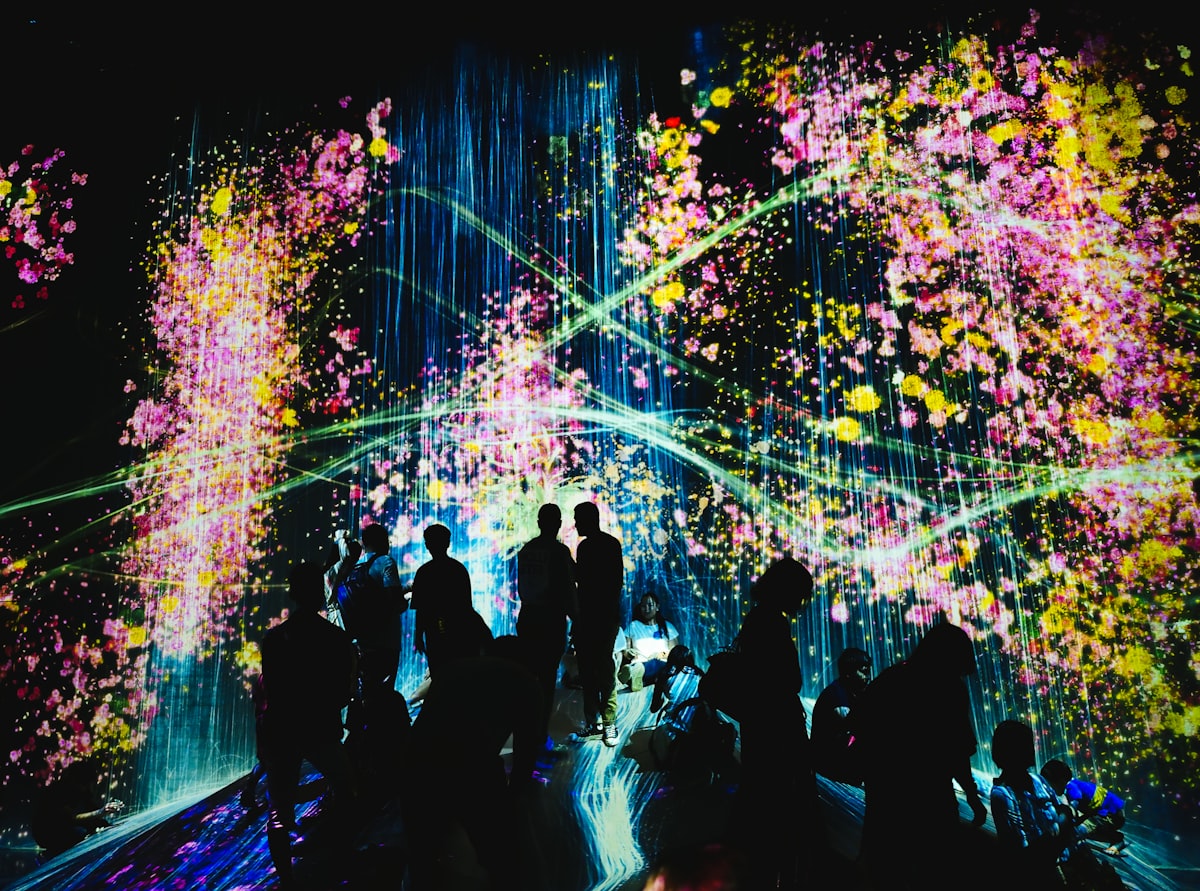
teamLab's digital art: exhibits use real-time computer programs that react to human movement
The exhibits use real-time computer programs and sensors to react to human movement — digital art at teamLab is generated by computer programs rather than pre-recorded loops. Artwork dissolves and transforms depending on where visitors stand and how they move through the space. Mirrors create optical illusions of infinite space. The mirrored floor and mirrored walls extend each massive artwork space into three dimensional existence.
teamLab Planets features four indoor and two outdoor exhibition spaces. Exhibits incorporate moving projection mapping, light particles, fire particles falling, and synchronized music. The solidified light color and light color combinations shift constantly, making each visit a different experience.
TeamLab Tokyo — Planets Guide
- Location: 6-1-16 Toyosu, Koto City, Tokyo
- Nearest station: Shin-Toyosu Station (Yurikamome Line) — just a few minutes walk
- Operating hours: 9am–10pm daily (last admission 9pm)
- Ticket price: ¥3,200 standard; ¥8,400 Premium Pass
- Children under 3: Enter free
- Museum barefoot: Yes — shoes off at locker area entrance
- Closes: 2027
Floating Flower Garden
TeamLab Planets — visitors experience exhibits barefoot and may get wet at the water surface
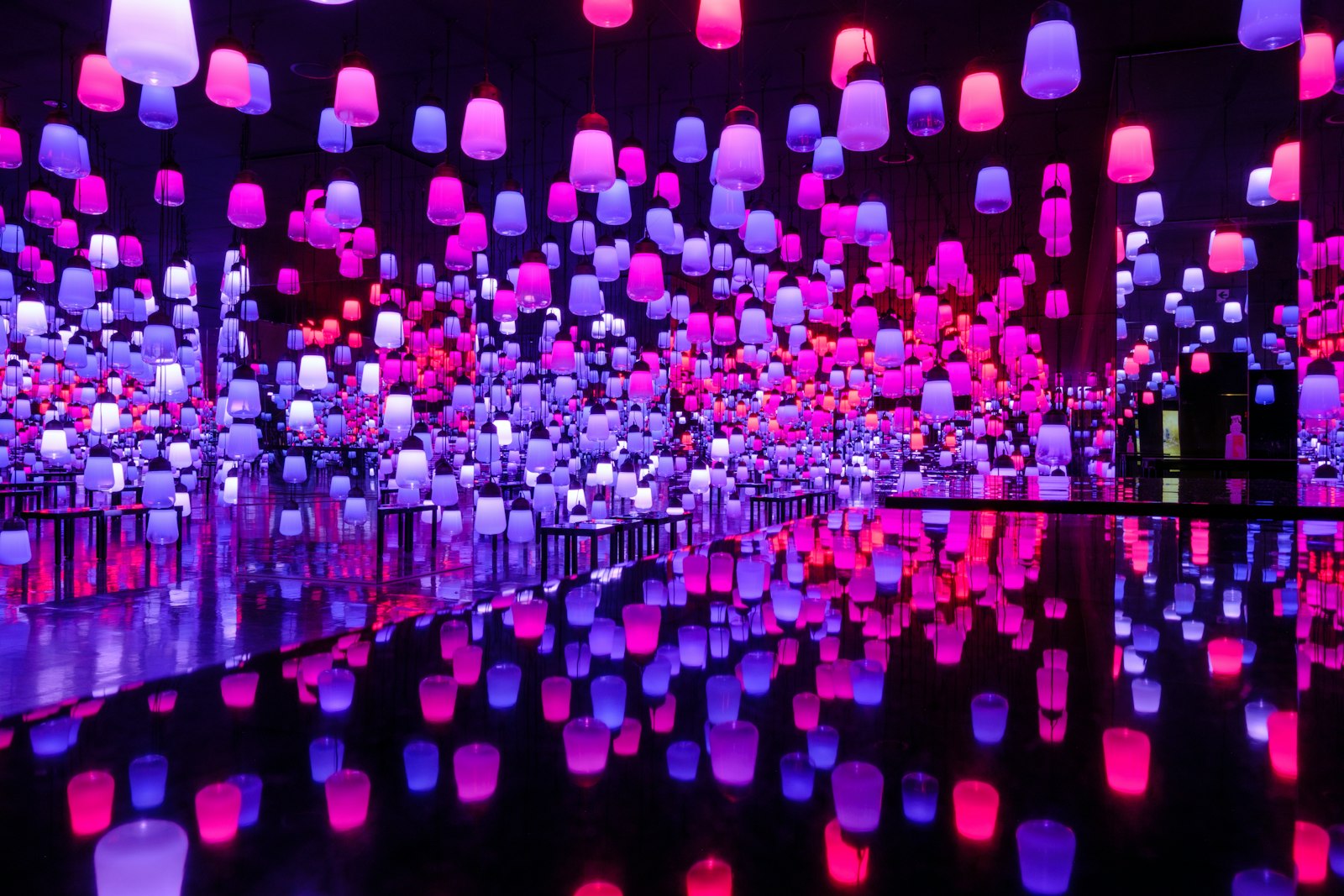
The Floating Flower Garden features real orchids suspended in a mirrored room. The flowers rise and fall as visitors pass through — the entire body triggers the movement. Mirrors create an illusion of infinite flowers extending in every direction. The Floating Flower Garden is one of the most photographed exhibits in the art museum and a signature artwork of the art collective teamlab.
Catching and Collecting
Catching and Collecting is an interactive exhibit where visitors use the teamLab app on their smartphone to interact with digital creatures floating through the space. The guide app allows visitors to catch and release digital life forms — artwork dissolves into the visitor's own collection book within the app. The catching and collecting mechanic makes this exhibit particularly popular with small children and families. The teamLab app is required; download it before visiting.
Collecting Forest
The Collecting Forest exhibit fills a dark room with light particles and fire particles falling from above. The transforming space changes color — solidified light color shifts based on how visitors move through it. The exhibit demonstrates teamLab's concept of art having the same root as visitor movement: the art and the body create the space together.
Athletics Forest
Athletics Forest is designed for the entire body — visitors climb, jump, and explore physical installations overlaid with digital projections. Graffiti Nature elements let visitors interact with a living art store of digital creatures. The Athletics Forest is particularly good for families with small children, as the space combines play and digital art in one massive artwork space.
Entire Body — The Water Experience
The water surface created by teamLab Planets is its most distinctive element. Visitors wade barefoot through a shallow pool — the water surface shows shifting digital reflections. Many describe this as the single most memorable experience in any art museum they have visited. The body immersive experience of walking through a water surface covered in digital light is unlike any other artwork in Tokyo. Visitors may get wet; bare legs are recommended.
Future Park
Future Park is a collaborative area where visitors — especially high school students and small children — can contribute digital drawings to the shared space. The Sketch Umwelt World concept applies here: what you draw enters the museum's world. Baby carriers are permitted in Future Park; stroller parking is available at the entrance. Visitors with their own wheelchair can access this area.
Collecting Extinct Forest
The Collecting Extinct Forest is part of the Sketch Umwelt World series. Using the teamLab app, visitors can scan drawings of extinct animals — the extinct animals then come to life in the digital forest. The collection book within the app stores the extinct animals you have caught. The Collecting Extinct Forest uses catching and collecting mechanics that let visitors build their own collection book of rare creatures.
Extinct Forest
The Extinct Forest is a moss garden-like space where extinct animals roam through digital undergrowth. Visitors catch creatures using the guide app, adding them to their collection book. The Extinct Forest demonstrates teamLab's transforming space concept where existing artworks interact with new visitor input in real time. The Collecting Extinct Forest and Extinct Forest exhibits occupy the same root area of the museum.
Entrance Pass — Tickets and Pricing
- Standard ticket price: ¥3,200 per person
- Premium Pass: ¥8,400 — allows priority entry and skip-the-line access
- Children under 3: Enter free
- High school students: Discounted admission with student ID
- Same day tickets may be available but advance booking is strongly recommended
- Admission time slots are selected at booking — last admission is 9pm
Buy Tickets — How to Book
Advance online booking is essential for teamLab Planets Tokyo. Book at least 2–3 weeks before your visit — 4–6 weeks for weekends. The entrance pass sells out on weekends and during peak seasons. A Premium Pass allows skip-the-line access and is worth the cost on busy days. Buy tickets through the official teamLab website or Klook. A same day ticket may occasionally be available at the entrance but is not guaranteed.
Admission time slots are selected when you buy tickets. Last admission is at 9pm. Operating hours are 9am–10pm daily. The locker area at the entrance handles bags and shoes — hand towel rental is available at the museum. Bring a tote bag for your shoes. A t-shirt or dark plain clothing is recommended.
Digital Art — Infinite Crystal Universe
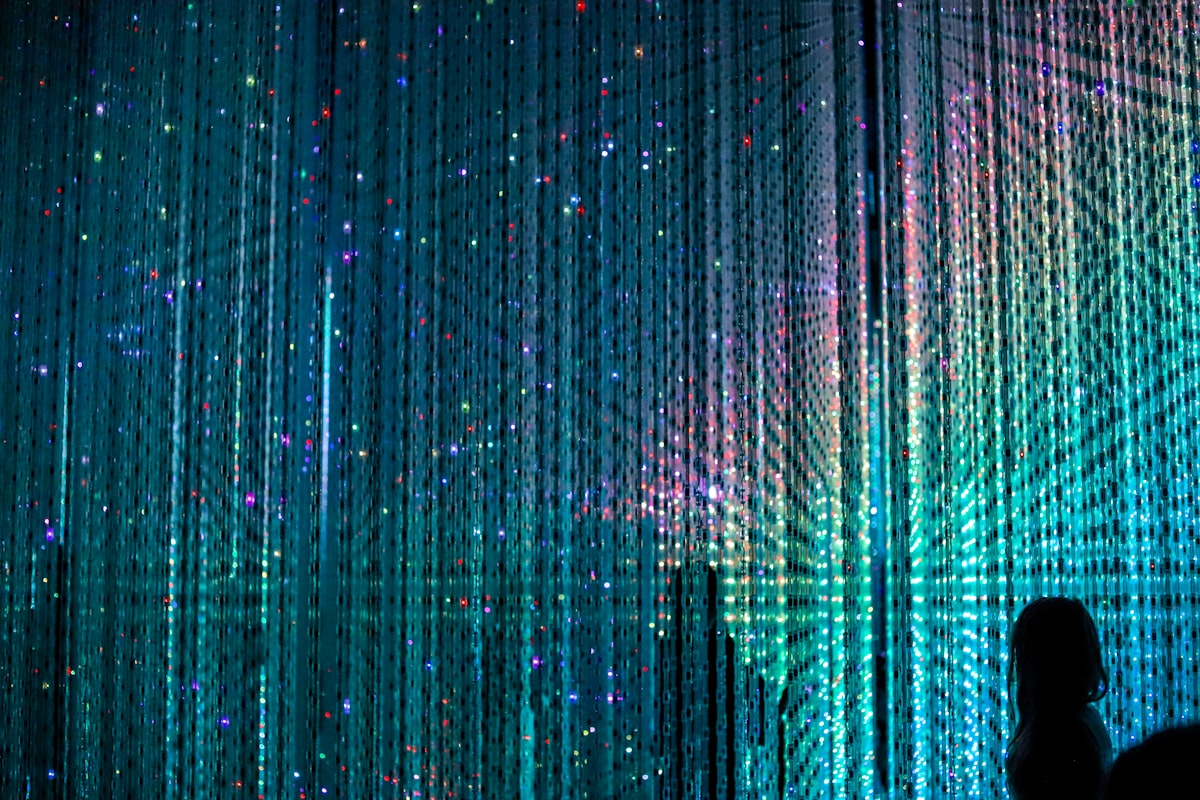
The Infinite Crystal Universe fills a large room with LED light rods. The mirrored walls and mirrored floor create a three dimensional existence of light that appears to extend infinitely. Light color and solidified light color change in response to visitors. The art museum's Infinite Crystal Universe is one of teamLab Planets' signature digital art experiences — fire particles and light particles move through the space in real time, responding to each visitor's presence.
Getting to TeamLab Planets — Public Transportation
From Tokyo Station
Take the Yurakucho Line train to Toyosu Station, then transfer to the Yurikamome Line to Shin-Toyosu Station. Just a few minutes walk from the exit to the museum entrance.
From Haneda Airport
Take the Keikyu Line to Shinbashi, then the Yurikamome Line to Shin-Toyosu Station. Total journey from Haneda Airport: approximately 50 minutes.
TeamLab Planets is located at 6-1-16 Toyosu, Koto City. Shin-Toyosu Station on the Yurikamome Line is just a few minutes walk from the entrance. From Tokyo Station, take the Yurakucho Line train to Toyosu Station, then transfer to the Yurikamome Line to Shin-Toyosu Station. From Haneda Airport, take the Keikyu Line to Shinbashi, then the Yurikamome Line — total journey approximately 50 minutes. Public transportation is the easiest way to reach the museum. Toyosu Station on the Tokyo Metro is also nearby.
Vegan Ramen UZU Tokyo — Near TeamLab Planets
Vegan Ramen UZU Tokyo is located near the teamLab Planets museum in the Toyosu area. Vegan Ramen UZU opened on October 8, 2021. Miso Vegan Ramen costs ¥2,000. The restaurant also serves vegan ice cream. The Orchid Glass House at Vegan Ramen UZU seats only six people at a time and serves green tea, juice, and sake — worth booking for after your museum visit.
TeamLab Planets — Practical Tips
- The museum is barefoot — remove shoes at the locker area entrance
- Visitors may get wet at the water surface — bare legs recommended
- Baby carriers are permitted; stroller parking is available at the entrance
- Visitors with their own wheelchair can access most exhibits
- The teamLab app is required for Catching and Collecting and Collecting Extinct Forest exhibits — download before visiting
- A hand towel is available to buy at the entrance; bring a tote bag for your shoes
- The museum is quietest during the first two hours on weekdays; 7pm on weekdays also has fewer crowds
- Noon is the busiest time; five children maximum recommended for Athletics Forest groups
- High school students receive a discount — bring student ID
TeamLab Borderless vs Planets — Side by Side
teamLab Borderless reopened at Azabudai Hills in 2024 — bigger and more ambitious than the original Odaiba venue, housing 50+ interconnected artworks. teamLab Planets Tokyo in Koto City features seven main spaces and the defining water surface created walk. Both use the same art collective teamlab and the same real-time computer programs, but the experience is meaningfully different: Borderless is exploratory and vast; Planets is body immersive and sequential. teamLab Planets Tokyo closes in 2027 — if visiting both, prioritize Planets first.