
"I ate the best crab of my life at Omicho Market — standing at a counter at 9am, watching the vendor crack it open. It cost about $15. Kanazawa is the best place in Japan to eat seafood and almost nobody outside Japan knows it."
Omicho Market Kanazawa
Omicho Market is Kanazawa's kitchen — a working food market at the heart of the city that has operated continuously since 1721–1722, making it one of the oldest markets in Japan. The market was established during the Edo period and has been part of Kanazawa's food culture for over 300 years. Today Omicho Market features more than 170 stores and stalls selling fresh seafood, fish, vegetables, fruits, meat, tofu, pickles, sake and prepared foods under a covered arcade in the centre of Kanazawa.
Kanazawa faces the Sea of Japan — one of the richest fishing grounds in the world — and the cold, deep waters of the Hokuriku coast produce fresh seafood of exceptional quality. Omicho Market is where this seafood arrives every morning: freshly caught fish, live crab, sweet shrimp, sea urchin, oysters and scallops, sold at the stalls by the same families who have run their stores here for generations. Kanazawa chefs come to Omicho Market for their ingredients; the fresh catches here are the reason Kanazawa has one of the strongest food cultures in Japan outside Tokyo and Osaka.
Omicho Market — Fresh Seafood
The fresh seafood at Omicho Market is the reason to visit Kanazawa. The Sea of Japan produces an exceptional range of fish and shellfish — different from the Pacific coast seafood of Tokyo, richer in fat and flavour due to the cold water temperatures. Over 170 seafood vendors in the market sell fresh seafood daily. The stalls display whole fish, live shellfish and fresh catches directly on ice, and the quality is immediately visible from the vibrant colour of the fish and the activity around the most popular stalls.
The most important fresh seafood at Omicho Market by season:
- Snow crab (zuwaigani) — the winter signature of Kanazawa and Ishikawa prefecture; in season November to March; the largest specimens are the most prized; sold whole or as picked crabmeat
- Kobako-gani — a winter specialty female snow crab, smaller than the male but prized for its rich egg-filled interior; kobako-gani is a winter specialty unique to the Sea of Japan coast
- Sweet shrimp (amaebi) — available year-round; spicy salted sweet shrimp and spicy pickled squid are two of the market's most distinctive prepared seafood items; raw sweet shrimp eaten as sashimi is the essential Omicho Market taste
- Sea urchin (uni) — local Sea of Japan uni has a distinctive sweetness; available through summer and autumn; oysters and uni are among the most popular seafood choices at the market
- Scallops — large, fresh scallops from the cold Sea of Japan waters; often grilled to order at market stalls with soy sauce and butter
- Buri (yellowtail) — large, fatty yellowtail from the winter Sea of Japan is one of Kanazawa's defining seasonal fish; Kanazawa buri is shipped to fish markets in Tokyo but the freshest is always at Omicho Market
Kanazawa's Kitchen — What to Eat at the Market
Omicho Market is known as Kanazawa's kitchen and it is a popular destination for street-side grazing as much as formal eating. The market serves grilled seafood cooked to order at many stalls — scallops grilled with soy sauce and butter, skewered fish, crab legs over charcoal. This is the best way to eat at Omicho Market on a first visit: walk the stalls, buy individual items, eat standing at the counter or on the street.
Kaisendon — kaisendon features fresh seafood served over warm rice in a bowl, assembled to order from the morning's fresh catches. Kaisendon is the signature sit-down dish at Omicho Market and is available at restaurants on the upper floor of the market building from about ¥2,000. The quality is consistently high; the seafood on your bowl was at the stall downstairs that morning.
Kanazawa curry — Kanazawa curry is a regional speciality that has become one of the city's most discussed dishes: a thick, dark roux curry served over rice with a fried cutlet, topped with shredded cabbage and eaten with a spoon. Curry rice croquettes are a popular comfort food at the market. Kanazawa curry is not seafood-based — it is a distinct regional development with a rich soy sauce-influenced flavour profile. Several restaurants near Omicho Market serve Kanazawa curry alongside seafood options.
Oden — oden is a soy sauce-based broth with various ingredients (fish cakes, tofu, daikon, konnyaku, eggs) simmered for hours. Kanazawa-style oden is one of the most celebrated versions in Japan — the broth is lighter and more refined than Tokyo oden, and the fish cakes are made from high-quality Sea of Japan fish. Available at several stalls and popular restaurants in and around Omicho Market, particularly in autumn and winter.
Noto beef nigiri — noto beef nigiri is made from premium local beef raised on the Noto Peninsula. Available at select stalls in the market, it is one of the few non-seafood items worth specifically seeking out.
Fish Market — Seasonal Guide
Omicho Market is crowded during November as the snow crab season opens — this is the most exciting time to visit the fish market, when the first crab of the season arrives and the stall owners compete to display the largest specimens. The market is busy every morning when locals buy fresh seafood for home cooking, but November through March is when the fresh catches are at their most spectacular.
In summer, snow crab is not available but fresh fish from the Sea of Japan is excellent year-round. Sweet shrimp is available in all seasons. Sea urchin is at its best in summer. Oysters peak in winter. The market combines traditional seafood vendors with stalls selling locally grown Kaga vegetables, fruits, flowers, tofu, pickles and rice — visiting Kanazawa's kitchen in any season produces something worth eating.
Omicho Market is best visited between 10am and 3pm — the stalls are fully stocked, the restaurants are open and the atmosphere is at its peak. Most stalls close by 5pm. Restaurants at Omicho Market open later in the morning than the seafood stalls. The market is quieter on Sunday afternoons when some shops close early.
Snow Crab — Kanazawa's Signature Season
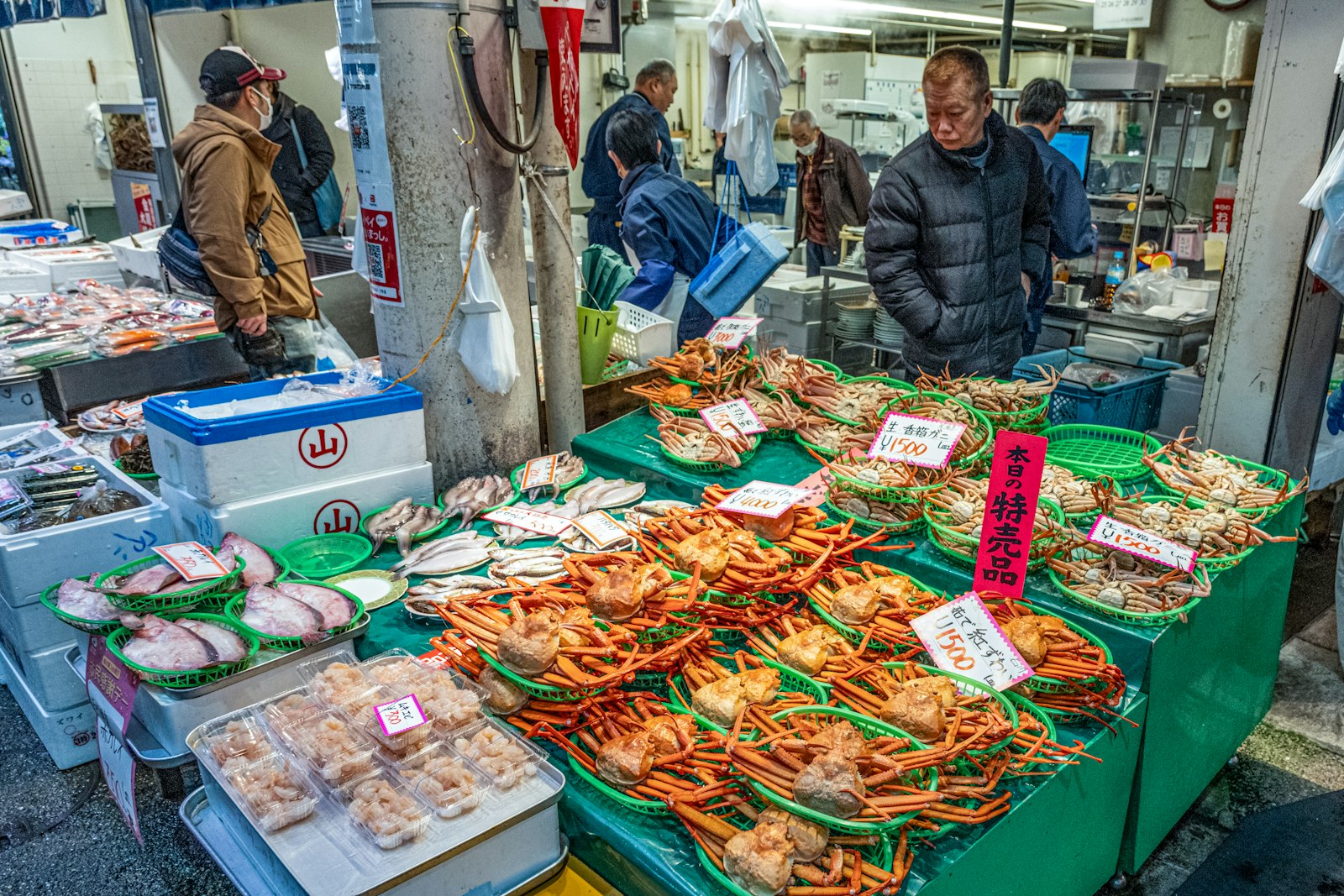
Snow crab season at Omicho Market runs November through March. During these months, the market's stalls are stacked with whole snow crab on ice — male zuwaigani (the large crabs) and female kobako-gani (smaller, with prized internal roe). The price of a whole male snow crab at Omicho Market ranges from ¥3,000 for a medium specimen to ¥15,000 or more for the largest grade-A crab. The stalls display the crab with their certification tags showing origin and grade — Kanazawa's fish market is one of the few places in Japan where you can confirm the provenance of the crab you are buying.
Crab can be eaten at counter seats at stalls in the market — grilled, steamed or raw as sashimi. A half snow crab at a market stall costs ¥1,500–3,000 and is the recommended way to taste the season's catch without the formality of a restaurant. If visiting Kanazawa in winter, eating snow crab at Omicho Market is the single most important food experience in the city.
Sea Urchin, Sweet Shrimp and Market Specialities
Sweet shrimp (amaebi) from the Sea of Japan is available year-round at Omicho Market and is one of the essential Kanazawa tastes. Eaten raw as sashimi, the translucent sweet shrimp flesh has a delicate sweetness that cooked prawns cannot replicate. Several stalls serve sweet shrimp as sashimi at counters for ¥500–800. Spicy pickled squid and spicy salted sweet shrimp are two of the market's most distinctive prepared foods — both are sold in small containers as tasting portions or in larger quantities for gifts.
Sea urchin (uni) from the Sea of Japan has a cleaner, sweeter flavour than Pacific coast uni. It is available at Omicho Market through the summer and autumn months. Fresh scallops are available year-round and are often displayed live in tanks before being grilled to order with soy sauce. Oysters from the Noto Peninsula are available through winter and are sold fresh at the stalls or served grilled at the market's seafood counters.
What to Buy — Sake, Vegetables and Gifts
Beyond eating, Omicho Market is excellent for food shopping. Local sake from Ishikawa prefecture breweries is available at specialist stalls — Kanazawa and the Noto Peninsula produce outstanding sake using the mineral-rich water of the Japanese Alps and local rice. Ask the stall owner for seasonal recommendations. Most shops at the market are used to visitors and will suggest what is worth buying.
Kaga vegetables — the regional varieties of turnip (Kaga turnip), lotus root, sweet potato and burdock developed over centuries in the Kanazawa area — are available at the market's vegetable stalls. Locally grown Kaga vegetables and fruits are among Japan's most celebrated regional produce and are not widely available outside Ishikawa prefecture. The pickles (tsukemono) from Kanazawa, often made from Kaga vegetables with local koji and soy sauce, are among Japan's finest and travel well.
Omicho Market Kanazawa — Getting There
From Kanazawa Station, take the Kanazawa Loop Bus to Musashigatsuji bus stop — the main entrance to Omicho Market is directly at the Musashigatsuji bus stop, on Musashigatsuji street. The journey from Kanazawa Station to the market takes about 10 minutes by bus. The Kanazawa Loop Bus runs every 15 minutes and connects Omicho Market with Kanazawa Station, Higashi Chaya district, Kenroku-en Garden and all the city's main destinations.
On foot from Kanazawa Station: about 15 minutes east through the city centre. From Kenroku-en Garden: 15-minute walk downhill. From the Nagamachi Samurai District: 10 minutes north. The market is conveniently located in the centre of Kanazawa and easy to reach from all the city's historical sites. Most of the market is under cover — a good option during Kanazawa's frequent rain. Parking is available nearby but the bus is recommended.
Most shops at Omicho Market are open 9am–5pm. The market is most active in the morning. Visit Kanazawa's kitchen on a weekday morning for the best selection of fresh seafood and the fewest tourists. The market has operated continuously since the Edo period and remains one of the most visited destinations in Kanazawa — plan your trip to include at least an hour here.